Mandarin · 17 October 2026 · Passive Constructions
被风吹倒被風吹倒
bèi fēng chuīdǎoPinyin
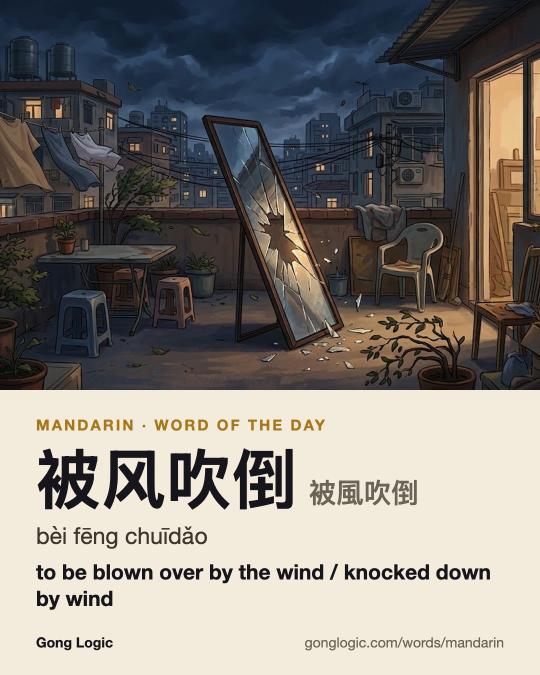
to be blown over by the wind / knocked down by wind
passive verb phrase
Utilizes the passive marker '被' to show that an upright object or person was toppled or collapsed ('倒') due to the force of the wind ('風').
In a sentence
昨晚深夜刮起狂风,这间顶楼加盖套房阳台立著的全身镜没固定好,直接被风吹倒砸烂了。
Zuówǎn shēnyè guā qǐ kuángfēng, zhè jiān dǐnglóu jiāgài tàofáng yángtái lì zhe de quánshēnjìng méi gùdìng hǎo, zhíjiē bèi fēng chuīdǎo zálàn le.
A wild wind blew up late last night; the full-length mirror standing on the balcony of this rooftop studio wasn't secured properly, and it was blown over by the wind and smashed to pieces.